
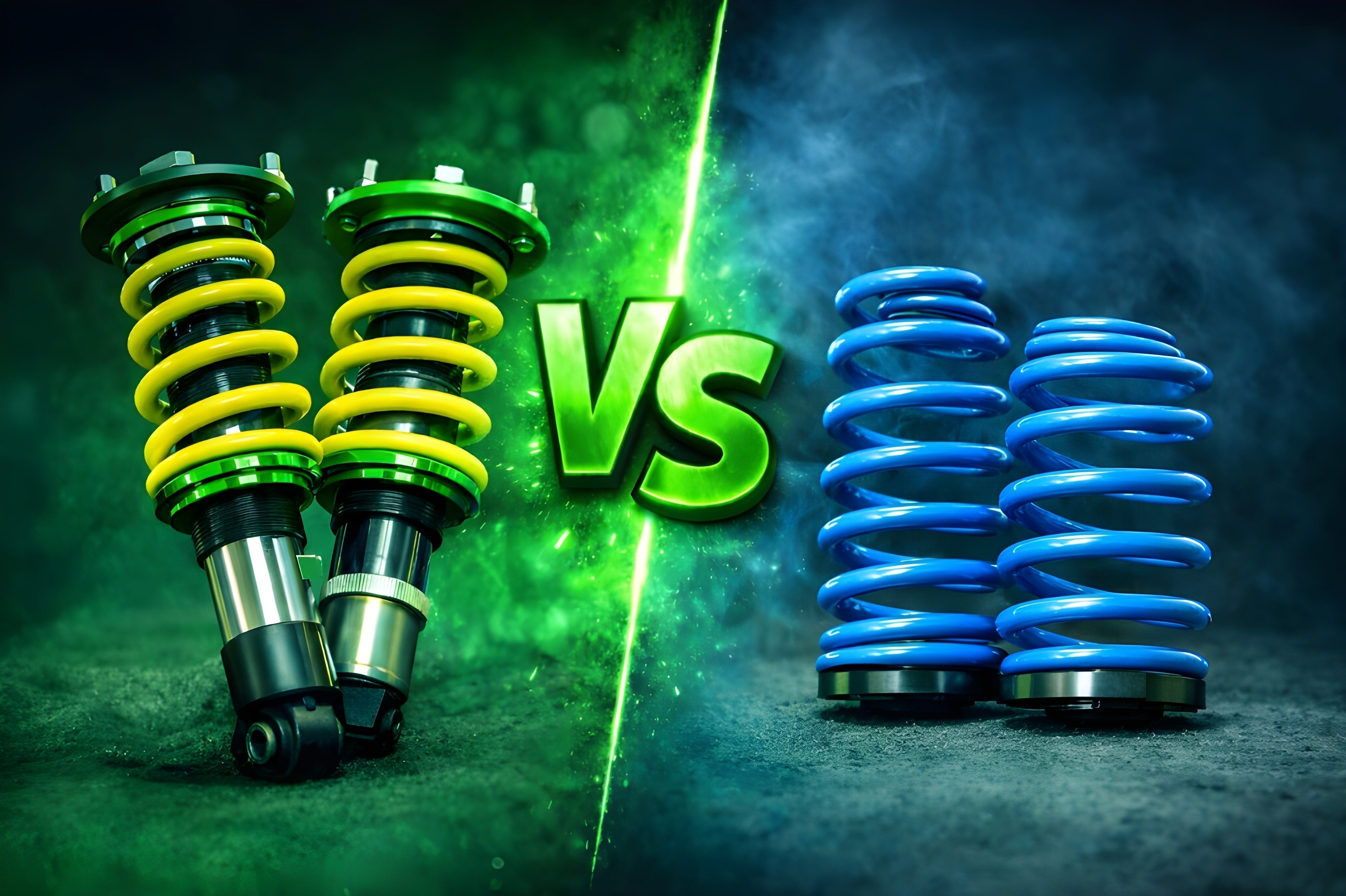
If you’re looking to lower your car, improve handling, or simply get rid of that factory wheel gap, you’ve probably come across two main options: coilovers and lowering springs.
Both are popular suspension upgrades—but they serve very different drivers, budgets, and performance goals.
At Springrates, we’ve specialized in aftermarket suspension since 2005, and we talk to enthusiasts every day who are trying to decide between the two. This guide breaks down the real-world differences so you can confidently choose the right setup for your build.
What Are Lowering Springs?
Lowering springs replace your factory springs while keeping your stock shocks and struts (or OEM-style replacements). Here is more on how lowering springs work. They lower your ride height, reduce body roll, and sharpen handling—often at a relatively affordable price point.
This is the most common first suspension upgrade for enthusiasts who want better stance and tighter handling without jumping straight into a full adjustable suspension system.
Benefits of Lowering Springs
- Lower center of gravity for improved handling
- Cleaner stance and reduced wheel gap
- Affordable suspension upgrade
- Maintains near-OEM comfort when properly matched
- Typically simpler and lighter than a full coilover setup
Potential Drawbacks
- Fixed ride height with no adjustability
- Limited tuning capability compared to coilovers
- Factory shocks can wear faster if they are not designed for the new spring rate
- Not ideal for aggressive track driving or frequent alignment changes
Best for: Daily drivers who want a lower stance and better handling without needing adjustability.
What Are Coilovers?
Coilovers replace the full shock and spring assembly with a performance suspension system designed for adjustability. If you are new to them, start with what a coilover actually is. Most modern coilovers allow you to adjust ride height and damping, and many include camber plates for additional alignment tuning.
This gives you full control over how your car drives, feels, and sits—whether you want a comfortable street setup, a canyon carver, or a track-focused build.
Benefits of Coilovers
- Adjustable ride height to dial in your stance
- Adjustable damping to tune comfort versus performance
- Higher performance potential with better body control
- Better control for track, autocross, or spirited driving
- Future-proof upgrade as your build evolves
Potential Drawbacks
- Higher upfront cost than lowering springs
- More setup involved including height, preload, damping, and alignment
- Ride quality can be firmer depending on the kit and tuning
Best for: Enthusiasts who want adjustability, better performance, and the ability to fine-tune their suspension setup.
Coilovers vs Lowering Springs: Side-by-Side Comparison
| Feature | Lowering Springs | Coilovers |
|---|---|---|
| Typical Cost | $200–$500 | $800–$3,000+ |
| Ride Height Adjustment | No | Yes |
| Damping Adjustment | No | Yes (most kits) |
| Performance Potential | Moderate | High |
| Track / Autocross Use | Limited | Recommended |
| Install & Setup | Moderate | Moderate (higher setup/tuning time) |
Installation and Durability: The Detail Behind the Ratings
Installing lowering springs: usually the more complex, time-consuming job. You have to disassemble the suspension and replace the factory springs.
Installing coilovers: coilovers ship preassembled in most cases, so the unit fits as one piece. The extra time goes into dialling in the ride height after the kit is on.
Durability: coilovers are typically more durable and able to withstand more stress and wear, because they are designed for the forces of performance driving, with the shock and spring engineered to work together as a matched unit.
Which One Should You Choose?
The right suspension upgrade depends on how you use your car, what you value most, and where you want your build to go in the future.
Choose Lowering Springs If:
- You want a lower stance and improved street handling
- You daily drive your car and want to keep comfort close to OEM
- You want a budget-friendly suspension upgrade
- You do not need adjustability or frequent tuning
If you commute, see our picks for the best options for a daily commute.
Choose Coilovers If:
- You want maximum handling and overall performance
- You plan to track, autocross, or drive aggressively
- You want adjustable ride height and damping
- You want a setup you can fine-tune over time
Two more things to check before you commit, whichever way you lean:
- Vehicle compatibility: neither component is a one-size-fits-all design, so confirm there are options that fit your specific make and model.
- Brand and vendor reputation: research the manufacturer and the retailer. Dig around for reviews from other customers and buy from a reputable, trustworthy seller to be sure of product quality and reliable delivery.
Why Buy Suspension from Springrates?
Since 2005, Springrates has been the original suspension source for enthusiasts who want real performance, honest recommendations, and a smooth ordering experience.
We work directly with the top suspension brands in the industry and make sure every kit we sell is properly matched to your vehicle and your goals.
From BC Racing and Fortune Auto to Megan Racing, Stance, Silvers, Feal, MTS Technik, and Riaction, we help you choose the right suspension the first time so you do not waste money replacing parts later.
- Vehicle-specific fitment support
- Honest recommendations based on your goals
- Real-time inventory updates
- Lowest price guaranteed
- Fast, free shipping on most orders
Ready to Upgrade Your Suspension?
Your suspension is the foundation of how your car drives. Whether you choose lowering springs or coilovers, the right setup will transform how your car looks and feels.
If you want help choosing the right suspension for your specific car, our team is here to make it easy.
Share:
Springrates 2025 Year in Review: Performance Suspension, Growth, and What’s Next
What are Coilovers? A simple explanation