
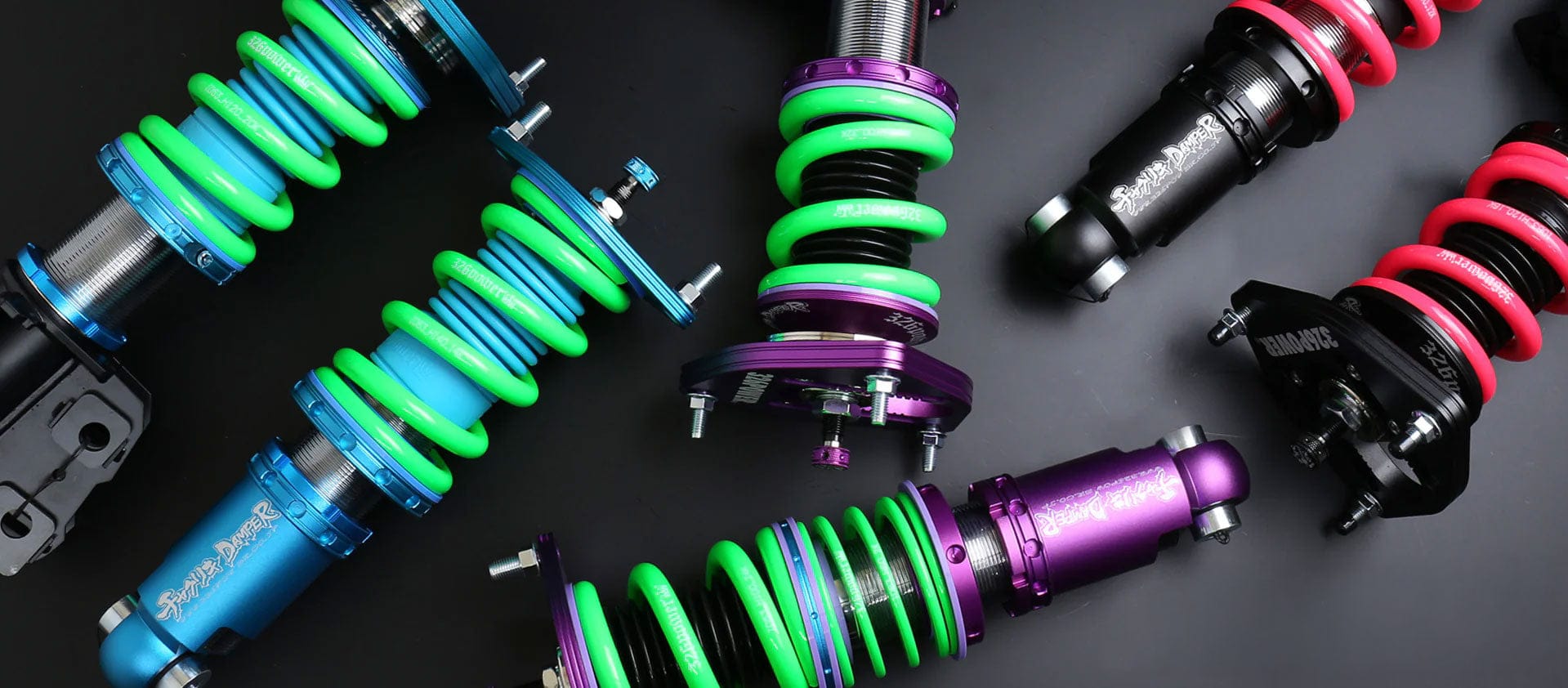
Coilovers are one of those mods you hear about constantly—right up there with wheels, tires, and exhaust. But the funny thing is, a lot of people talk about coilovers without really defining what they are or what they’re supposed to accomplish. Some drivers buy them to get the car lower. Others want tighter handling. Some want both. And some just want to get rid of that tired, floaty factory feel.
If you’ve been researching suspension upgrades, you’ve probably already seen how many coilover options exist for different vehicles and driving styles. Understanding what coilovers actually do makes choosing the right setup much easier.
So let’s clear it up in plain English: coilovers are a suspension setup that combines a coil spring and shock (damper) into one assembled unit. The word literally comes from “coil spring over shock.” That’s the basic idea—but the reason coilovers are popular isn’t just because of the design. It’s because they let you adjust and control your suspension in a way most factory setups don’t.
And when people ask, “What do coilovers do?” the best answer is: they let you change how your car sits and how it behaves. When you pick the right kit and set it up correctly, coilovers can make a car feel more planted, more responsive, and more confident—especially when you’re pushing it a little harder than normal commuting.
First, the simple definition: what are coilovers?
A typical factory suspension uses a shock absorber and a spring to support the car and control movement. Here is how they differ from standard shocks. On many vehicles, the spring and shock are separate components (for example, a spring on a control arm and a shock mounted nearby). On others, they’re together as a strut assembly.
A coilover is basically the performance version of that concept: the spring and damper are designed to work together as a matched system. Instead of mixing-and-matching factory components, the coilover kit is built around specific spring rates and damper valving for the vehicle.
Most coilovers also use a threaded body or adjustable spring perch, which is where the real advantage comes in—because it’s what makes ride height adjustment possible without relying on cutting springs or hoping your factory shocks tolerate being lowered.
What do coilovers do?
Coilovers do a few big things, and which one matters most depends on what you’re trying to fix or improve.
1) They let you adjust ride height. Coilovers usually allow you to lower (or sometimes raise) the car precisely. That means you can dial in stance, correct uneven fender gaps, or get the car where you want it without the guesswork of how much springs will settle.
2) They improve body control. This includes reducing brake dive, minimizing squat under acceleration, and limiting body roll in corners. A good coilover setup makes the car feel more composed and predictable.
3) Many kits offer damping adjustment. This controls how fast the suspension compresses and rebounds. Softer settings can improve comfort on rough roads, while firmer settings sharpen response for spirited driving. For the full method, see our guide on how to adjust your coilovers.
4) They can improve steering feel. Better suspension control often means sharper turn-in and more consistent grip, especially during aggressive driving.
The 4 Types of Coilovers
Not all coilovers are built the same. Knowing the four main types makes it easier to match a kit to your goals and budget.
- Coilover sleeves: the entry point. They look a lot like lowering springs, but the sleeve is height adjustable. Sleeves fit over your existing shocks (top mounts included) and let you set ride height. They do not add shock adjustability or come with their own shocks or struts. Best for a budget-friendly drop with some height control.
- Non-shock-adjustable coilovers: a full-bodied coilover that comes with its own shocks, but the shock is fixed. You can dial in ride height, but you cannot change rebound, compression, or stiffness. Best for drivers who want a proper lowered stance and height choice without fussing over damping.
- Shock-adjustable coilovers: the same setup as above, with one important difference: the shock is adjustable. You can tune stiffness, rebound, and compression to fine-tune how the car feels. A popular mid-range choice for enthusiasts who want comfort on the street and control on track.
- Shock-adjustable coilovers with a camber kit: the premium tier. You get height adjustment, adjustable shocks, and a front camber kit (some include a rear kit too) for full control over suspension geometry. Best for serious tuners chasing maximum grip and adjustability.
Coilovers vs lowering springs
Lowering springs are often chosen for budget builds or mild drops, and they can be a good solution when the goal is primarily aesthetics, though it is worth knowing how they stack up against a full coilover setup before you commit. However, lowering springs typically reuse factory shocks, which may not be designed for shorter travel or increased spring rates. If you’re exploring this route, lowering springs can be a simpler alternative for achieving a lowered stance.
Coilovers are different because they’re designed as a complete system. That’s why they’re often the better choice for drivers who want meaningful handling improvements instead of just a cosmetic change.
Coilover springs and ride tuning
Another benefit of coilover systems is the ability to fine-tune spring rates. Many setups allow you to change springs independently of the damper, which can be useful as your build evolves or driving needs change. For those looking to customize their setup further, coilover springs are available in a wide range of rates and sizes.
Swapping coilover springs allows drivers to adjust stiffness, balance front-to-rear grip, or accommodate changes such as wider tires or track-focused alignment settings.
Height adjustable springs and coilover sleeves
Some vehicles don’t use full coilover kits but instead rely on height adjustable spring systems, often referred to as coilover sleeves. These setups combine a threaded sleeve with a performance spring and work in conjunction with a compatible shock.
Also known as height adjustable springs, coilover sleeves offer a middle ground between lowering springs and full coilovers. They provide some adjustability while retaining a more budget-friendly approach for certain applications.
Street coilovers vs track coilovers
Street-focused coilovers are designed to balance comfort and performance, making them well-suited for daily driving. Track-focused coilovers prioritize grip, response, and consistency, often at the expense of ride comfort.
Choosing the right type depends on how the car is driven most of the time. A street-oriented setup usually makes the most sense for daily-driven vehicles.
Are coilovers good for daily driving?
Yes—when they’re chosen and set up correctly. Most ride complaints come from improper setup, overly aggressive spring rates, or running the car too low.
A properly adjusted street coilover kit can feel controlled and composed without being harsh.
Final thoughts
Coilovers aren’t just about lowering your car. They change how weight transfers, how the chassis responds, and how confident the car feels behind the wheel. When selected and installed properly, they become the foundation of a well-balanced suspension setup. Planning a DIY job? Our guide to installing coilovers walks through the whole process.
Still deciding? Our guide on whether coilovers are worth it weighs up the pros and cons. If you're ready to upgrade, understanding what coilovers do makes it easier to choose a setup that matches your goals—whether that's better handling, improved stance, or a more engaging driving experience. Ready to go? Browse coilovers for your vehicle.
Share:
Coilovers vs Lowering Springs: Which Suspension Upgrade Is Right for Your Car?
How to Adjust Coilovers: Ride Height, Preload, and Damping Explained