
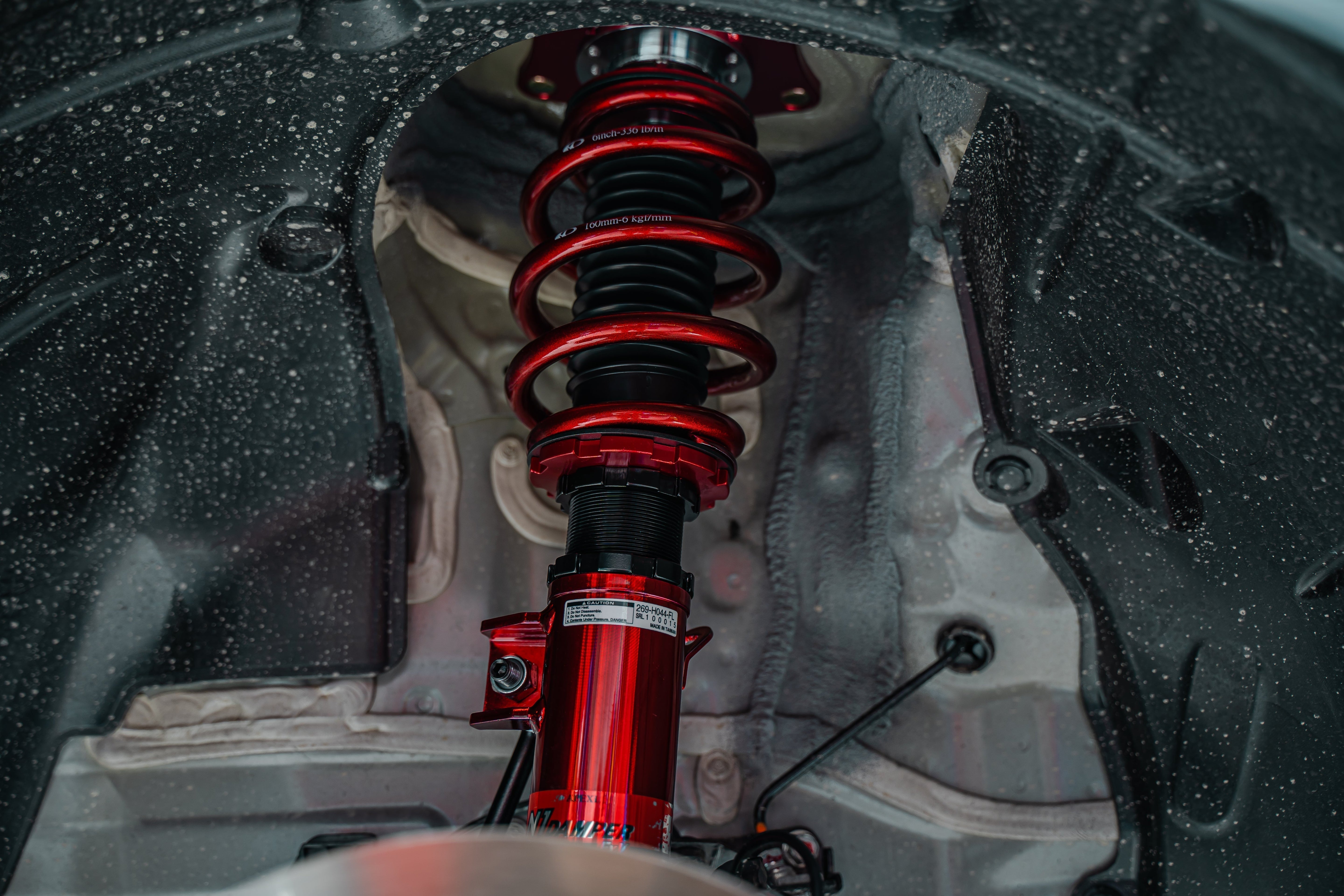
Learning how to adjust coilovers properly is essential if you want the perfect balance of ride height, handling, comfort, and tire life. Coilovers offer far more adjustability than lowering springs, but incorrect adjustments can lead to harsh ride quality, uneven stance, poor handling, and premature tire wear. See our roundup of common adjustment mistakes to avoid. If you are new to them, it helps to understand how coilovers work first.
This guide explains how to adjust coilovers the right way, including ride height adjustment, spring preload setup, and damping settings. Whether you’re dialing in your daily driver, weekend canyon carver, or track build, these steps will help you get the most out of your suspension.
Quick links: Shop Coilovers · BC Racing Coilovers · Fortune Auto Coilovers · Stance Coilovers · SF Racing Coilovers
What can you adjust on coilovers?
Most modern coilovers allow multiple suspension adjustments that affect ride height, handling, and comfort:
- Ride height adjustment
- Spring preload
- Damping (shock stiffness)
- Optional camber adjustment (on select applications)
If you’re looking for fully adjustable suspension, browse our coilover collection or explore popular options like BC Racing Coilovers.
How to adjust coilover ride height

Ride height adjustment allows you to raise or lower your vehicle to improve stance, handling, and center of gravity. The correct method depends on your coilover design. For the trade-offs, read balancing ride height and handling.
Common ride height adjustment methods
- Adjustable shock body: height is changed by threading the shock body into or out of the lower mount.
- Spring perch adjustment: some designs use the spring perch to set ride height.
How to measure ride height correctly
- Measure from the wheel center to the fender.
- Record measurements for all four corners.
- Adjust in small increments for accuracy.
Step-by-step ride height adjustment
- Safely lift the vehicle and support it with jack stands.
- Loosen the locking collar on the coilover.
- Adjust ride height using the proper method for your coilover design.
- Tighten locking collars securely.
- Lower the car, roll it to settle the suspension, and re-measure.
Quality kits like BC Racing coilovers are designed to maintain suspension travel while allowing precise height adjustment.
How to Set Spring Preload (Step by Step)
Preload is how much the spring is compressed when the suspension is fully extended. Setting it correctly keeps the spring seated without eating into suspension travel. Work one corner at a time.
What you need: a coilover spanner or lock-ring wrench. On BC-style kits the wrench is 4mm thick, which handily doubles as your gap gauge.

Steps:
- Loosen both lock rings under the spring (the spring seat ring on top and the spring lock ring on the bottom) so the spring is loose and can move up and down slightly.
- Tighten the spring seat ring until the spring is just snug. Do not go past holding it snug: this is your zero-preload baseline.
- Bring the bottom lock ring up so it is just touching the spring seat ring. Do not lock it yet, because you are about to move the seat ring.
- Tighten the spring seat ring further to start preloading (compressing) the spring.
- Watch the gap between the two rings as you go. Once there is a 3 to 5mm gap, you have 3 to 5mm of preload. Tip: the lock-ring wrench is 4mm thick, so when it just slips between the rings you are in the right range.
- Tighten the bottom lock ring against the seat ring to lock your preload in place.
- Repeat on all four corners so the preload is even.
Preload vs ride height: preload does not set ride height on its own. For example, a 15 inch 100 lb/in spring with 1 inch of preload gives the same ride height as a 10 inch 100 lb/in spring with 1 inch of preload. Set ride height from the lower mount or shock body, and use preload to keep the spring seated. Your setup also depends on spring rate — here's how to choose it.
Re-check these fasteners after adjusting: the top centre nut (an impact gun makes this easier), the lower mounting bolts, the camber plate allen bolts, and the four lock bolts under the pillowball bearings if your kit has them.
How to adjust coilover damping settings
Damping adjustment controls how quickly the suspension compresses and rebounds. This directly affects ride comfort, handling response, and body control.
How to adjust damping
- Locate the adjustment knob (typically on top of the strut).
- Turn clockwise for stiffer damping.
- Turn counterclockwise for softer damping.
- Match settings on both sides of the vehicle.
Common coilover adjustment mistakes
Lowering the car incorrectly
Using the spring perch to lower adjustable-body coilovers can reduce suspension travel and degrade ride quality.
Uneven adjustments
Always match ride height measurements and damping clicks on both sides of the vehicle.
Skipping alignment after adjustments
Changing ride height affects camber and toe. A professional alignment is essential to prevent tire wear and maintain proper handling.
What to do after adjusting coilovers
- Drive the vehicle to let the suspension settle.
- Re-check ride height measurements.
- Re-torque locking collars.
- Schedule a professional alignment.
Recommended baseline settings for street driving
- Ride height: maintain adequate suspension travel
- Preload: snug spring with minimal additional compression
- Damping: start mid-range and fine-tune
Browse our coilover collection to find the right setup for your vehicle.
FAQ: How to adjust coilovers
Does spring preload change ride height?
On most adjustable-body coilovers, preload should not be used to set ride height. Ride height is typically adjusted at the shock body or lower mount.
How many damping clicks should I use?
Start in the middle of the adjustment range and fine-tune based on comfort and handling preferences.
Do I need an alignment after adjusting coilovers?
Yes. Any significant ride height change affects alignment and can cause tire wear if not corrected.
Final thoughts
Properly adjusting coilovers improves ride quality, handling, and tire life. Small, precise adjustments combined with proper alignment will help you get the most from your suspension setup. Need a set first? Shop adjustable coilovers.
Share:
What are Coilovers? A simple explanation
BC Racing Launches the ASP Series: Adjustable Spring Perch That Retains OEM Electronic Damping