
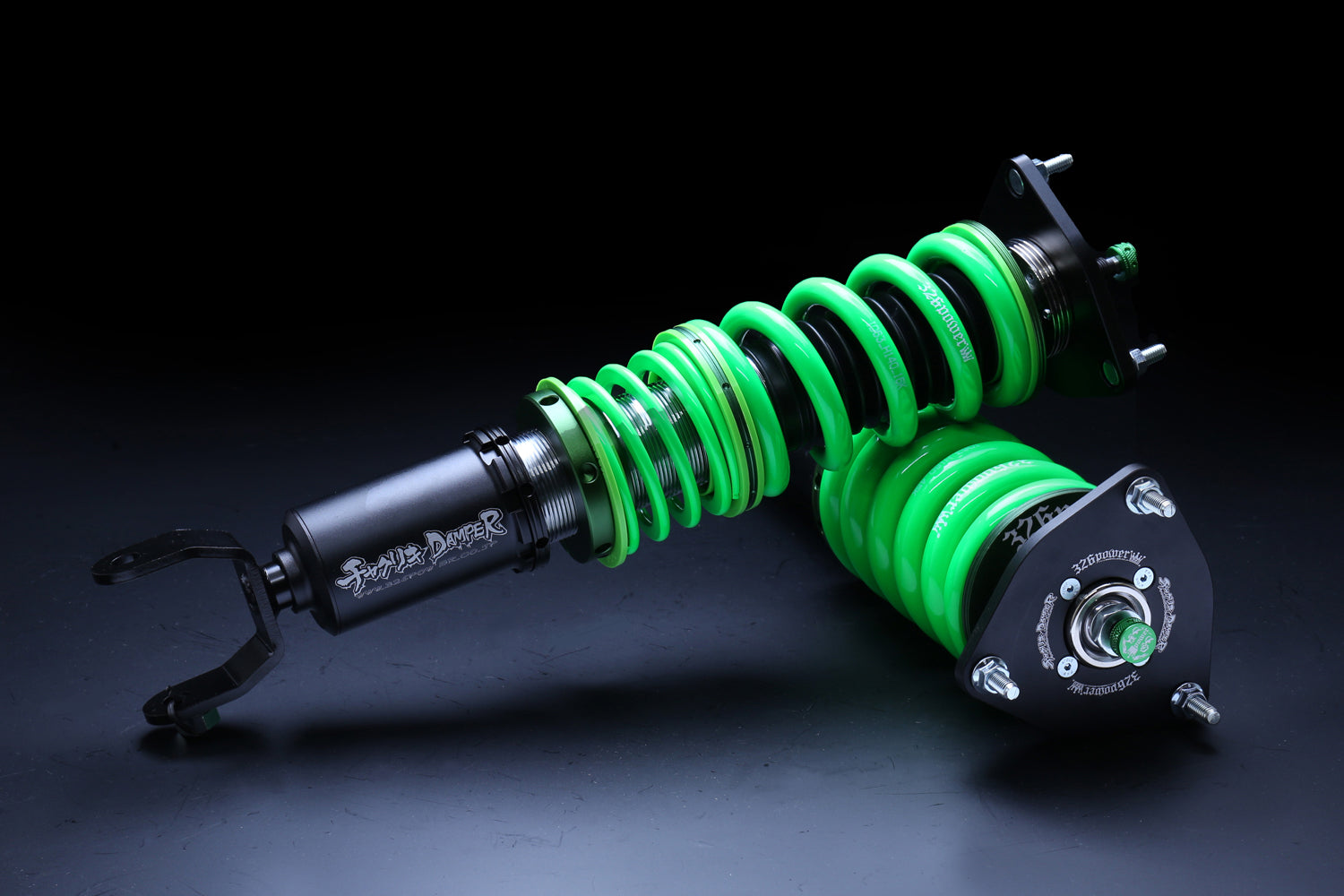
If you’ve been researching suspension upgrades, chances are you’ve come across coilovers—and you’ve probably asked yourself the same question many other drivers do: are coilovers worth it?
It’s a reasonable question. Coilovers are one of the most popular suspension upgrades in the aftermarket world, but they’re also one of the most misunderstood. Some drivers swear by them for the improved handling and aggressive stance, while others worry they’ll ruin ride quality or make a daily driver uncomfortable.
The reality is that coilovers aren’t inherently good or bad. Whether they’re “worth it” depends entirely on what you expect them to do and how you plan to use your vehicle.
What Coilovers Are (And What They Aren’t)
A coilover is a complete suspension assembly that combines a shock absorber and a coil spring into a single adjustable unit. For a full primer on how the parts work together, start here. Unlike factory suspension or basic lowering springs, coilovers are designed to give you a higher level of control over your vehicle's setup, so it is worth seeing how they compare with basic lowering springs. This can include ride height adjustment, improved handling characteristics, and in many cases, adjustable damping. You can view a full range of coilover suspension kits here.
At the same time, it’s important to understand what coilovers are not. They are not OEM replacement parts, they are not designed to preserve factory ride height, and they are not intended to be a universal comfort upgrade. Coilovers are performance-oriented components, built with handling and adjustability in mind.
Why People Choose Coilovers
Most drivers who install coilovers do so for a combination of performance, adjustability, and aesthetics. One of the biggest advantages is adjustable ride height. Coilovers allow you to lower your vehicle beyond what most lowering springs can achieve and fine-tune the stance to your exact preference.
Handling improvement is another major factor. By lowering the vehicle’s center of gravity and using performance-focused damper valving, coilovers can reduce body roll, improve cornering stability, and make the car feel more planted—especially during spirited driving.
Many coilover kits also offer damping adjustment, which allows you to fine-tune how firm or compliant the suspension feels. This flexibility makes it possible to balance daily driving comfort with weekend performance, provided the kit is designed for street use and set up correctly.
Finally, coilovers are engineered as a complete, matched system. Unlike pairing lowering springs with factory shocks, a quality coilover kit is designed from the ground up to work together, reducing compromises and inconsistencies.
The Downsides You Should Consider
Despite their benefits, coilovers are not without tradeoffs. One of the most noticeable changes for many drivers is ride comfort. Coilovers typically feel firmer than stock suspension, which means you’ll feel more of the road. This doesn’t automatically mean the ride will be uncomfortable, but it does mean the driving experience will change. If a plain shock upgrade is on the table too, see how they compare with a basic damper swap.
Proper setup is another important consideration. Ride height, preload, alignment, and damping adjustments all play a role in how coilovers perform. Even a high-quality kit can feel harsh or unstable if it’s not set up correctly, which is why professional installation and alignment are strongly recommended.
There’s also a maintenance aspect to consider. Performance suspension components may require periodic inspection or servicing over time, particularly in areas with rough roads, harsh winters, or frequent exposure to moisture.
Are Coilovers Worth It for Daily Driving?
For many drivers, the answer is yes—provided the right coilover kit is chosen and expectations are realistic. High-quality coilovers designed specifically for street use can be daily driven without issue, and many are tuned to strike a balance between comfort and performance. If it's mostly a commuter, here are our top picks for daily driving.
However, if your main goal is to preserve factory ride height or maintain the same comfort level as a luxury-oriented OEM suspension, coilovers may not be the best option. In those cases, lowering springs or OEM-style suspension upgrades often make more sense.
Can Coilovers Be Set to Factory Ride Height?
This is one of the most common misunderstandings surrounding coilovers. In most cases, the answer is no. Coilovers are designed to lower the vehicle, and while some kits may physically adjust close to stock height, achieving true factory ride height is not their intended purpose and is often not recommended.
If maintaining factory ride height is a priority, coilovers are usually not the right solution and a different type of suspension upgrade should be considered.
Coilovers vs Lowering Springs
Choosing between coilovers and lowering springs comes down to your goals. Lowering springs are generally more affordable, simpler to install, and retain more of the factory ride characteristics, but they offer limited adjustability.
Coilovers, on the other hand, provide adjustable ride height, greater tuning potential, and improved handling capability, but they come at a higher cost and require more attention to setup.
If adjustability and performance are priorities, coilovers are typically the better choice. If you’re looking for a mild drop with minimal complexity, lowering springs may be the better fit.
So, Are Coilovers Worth It?
Coilovers are worth it if you want to lower your vehicle, improve handling, and have control over how your suspension is set up. They’re also worth it if you understand that ride quality will change and you’re willing to invest the time and effort into proper installation and alignment.
They may not be worth it if you’re expecting factory ride height, OEM comfort with no compromises, or a completely hands-off ownership experience.
When chosen for the right reasons, coilovers can be one of the most rewarding suspension upgrades available. When chosen for the wrong reasons, they’re often blamed for issues they were never designed to address.
Final Thoughts
The real question isn’t simply whether coilovers are worth it—it’s whether they’re the right solution for what you’re trying to achieve. Understanding that distinction can save you money, frustration, and disappointment, while helping you build a suspension setup that truly matches your goals. Think they're worth it? Browse coilovers for your car.
Share:
How to Select the Right Spring Rate for Your Driving Style & Vehicle
Springrates 2025 Year in Review: Performance Suspension, Growth, and What’s Next