
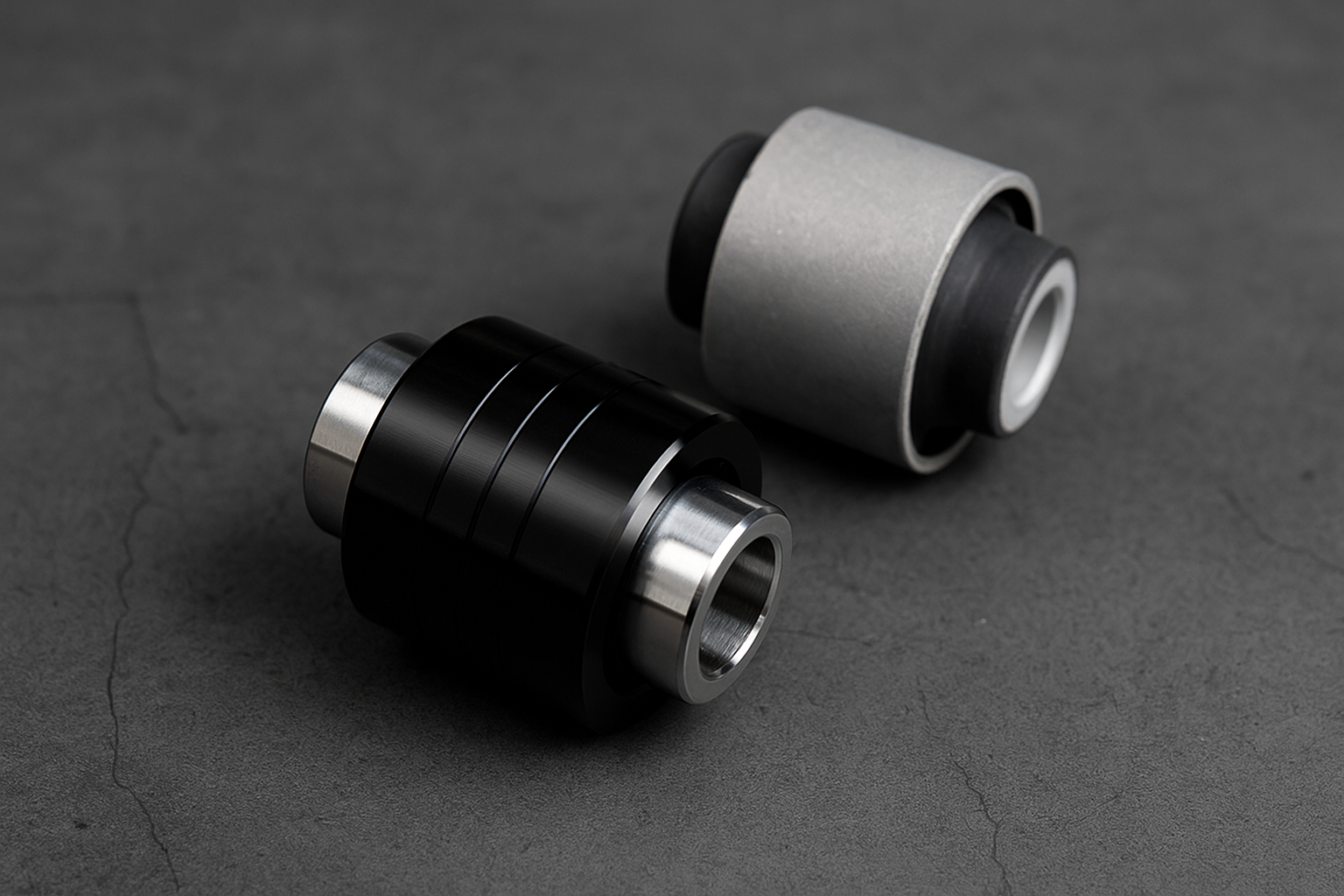
When shopping for coilovers or suspension upgrades, it’s common to see the term pillowball mounts and assume it means camber plates. This misunderstanding happens all the time—but the two aren’t the same.
Pillowball refers to the type of bushing used in the mount, while camber plates are adjustable top mounts that let you fine-tune alignment. Many camber plates do use pillowball bushings, but not every pillowball mount is a camber plate. Clearing up this difference helps you choose the right suspension setup for your car without surprises.
What Are Pillowball Bushings?
Pillowball bushings replace the soft rubber found in most OEM mounts with a spherical bearing. This design reduces flex and provides a direct connection between your suspension and chassis. Despite their name sounding like a comfortable pillow, they're actually the opposite.
Why enthusiasts like them:
- Sharper and more precise steering response
- Improved road feel and driver feedback
- Better alignment stability under cornering and braking
The trade-off:
- Increased noise, vibration, and harshness (NVH)
- Less forgiving on rough roads
- May require more maintenance depending on the design
In short: pillowball = performance and precision, but at the cost of comfort.
What Are Rubber Bushings?
Hardened r ubber bushings are what most cars come with from the factory. They’re designed to prioritize comfort and durability over sharpness.
Why drivers like them:
- Absorb vibrations and reduce road noise
- Provide a smoother, quieter ride
- Low maintenance and long lifespan
The trade-off:
- Rubber flexes under load
- Reduced steering precision and less consistent alignment
- Less control when driving aggressively
In short: rubber = comfort and quiet, but with some performance compromise.
Are Pillowball Mounts the Same as Camber Plates?
No. This is where most of the confusion comes from.
- Pillowball → The bushing type (spherical bearing instead of rubber)
- Camber Plate → The mount design that lets you adjust alignment settings like camber (and sometimes caster)
Many camber plates use pillowball bushings, but having pillowball mounts doesn’t mean you automatically get alignment adjustability.
Common Questions About Pillowball Bushings
Are pillowball mounts noisy?
Yes. Compared to rubber, pillowball bushings transmit more vibration and road noise. For daily driving, this can feel harsh, but enthusiasts often accept it in exchange for better handling.
Do pillowball mounts need lubrication?
Some designs are sealed and self-lubricating, while others require periodic inspection or lubrication. Always check the manufacturer’s recommendations.
Which is better—pillowball or rubber bushings?
It depends on your priorities:
- Daily drivers or commuters → Rubber is usually best
- Street/track mix or spirited driving → Pillowball can sharpen handling without going full race car
- Dedicated track cars → Pillowball is the clear winner
Are pillowball bushings OK for daily driving?
They can be, but expect more NVH. If comfort matters most, rubber bushings are better. If you want precision and can live with a harsher ride, pillowball is worth it.
Quick Comparison: Pillowball vs Rubber
| Feature | Rubber Bushings | Pillowball Bushings |
|---|---|---|
| Ride Comfort | High (absorbs NVH) | Low (transmits NVH) |
| Alignment Stability | Moderate (flex under load) | High (minimal flex) |
| Adjustability | None | None unless paired with camber plate |
| Maintenance | Low | Varies (some need lube) |
| Best For | Daily driving, commuting | Track use, performance builds |
How Camber Plates Fit Into the Picture
Camber plates are designed for alignment tuning. They’re often paired with pillowball bushings because rubber would flex too much, making the adjustments less effective.
But remember: not all pillowball mounts are camber plates, and not all camber plates have to use pillowball bushings.
Which Should You Choose?
- Daily Driving → Rubber bushings or non-adjustable mounts for maximum comfort
- Street & Track Enthusiasts → Camber plates with pillowball bushings give the best mix of precision and flexibility
- Track Cars → Pillowball camber plates for maximum control and alignment consistency
Final Thoughts
The key takeaway is simple: pillowball = bushing type, camber plate = adjustable mount. They often go together, but they’re not interchangeable terms.
Knowing the difference ensures you pick the right suspension parts for your goals—whether that’s a smooth commute, a sharper street setup, or a full-on track build.
Share:
Do All Cars Support Camber Plates? What You Need to Know About Camber Adjustment
Understanding Tariffs on International Orders