
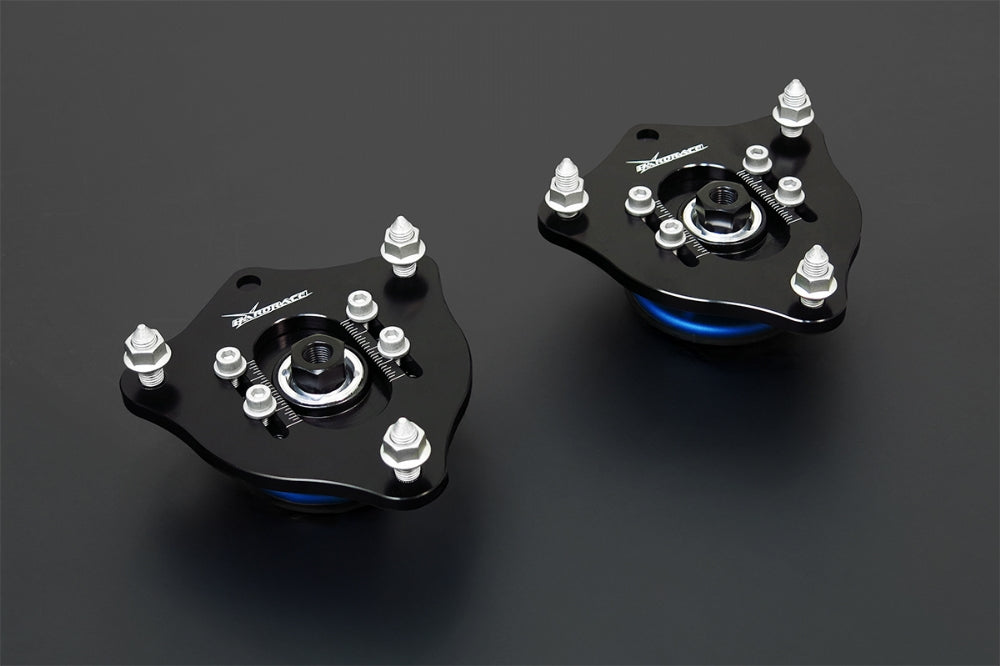
Lowering your car with coilovers, lowering springs, or air suspension is one of the most popular ways to improve handling and achieve a more aggressive stance. But with suspension upgrades comes an important question we often hear: “Do all cars support camber plates?” The answer is no—and understanding why will help you make the right suspension choices.
What Is Camber and Why Does It Matter?
Camber is one of the three main wheel alignment settings, along with toe and caster. It describes the tilt of the wheels when viewed from the front or rear of the vehicle:
- Negative camber: the tops of the wheels tilt inward, improving cornering grip.
- Positive camber: the tops of the wheels tilt outward, usually undesirable for performance.
Getting camber right is critical for both performance and tire wear. Track cars often run more negative camber for better handling, while street cars benefit from camber that’s closer to factory specs to maximize tire life.
Not Every Car Can Use Camber Plates
Camber plates are most commonly used with MacPherson strut suspension setups. Since the strut mounts directly to the chassis, aftermarket coilovers often include camber plates that allow easy camber adjustment at the top.
However, many vehicles do not use strut suspensions. Cars with double-wishbone or multi-link suspension don’t support camber plates, because camber is controlled by the suspension arms, not the top mount. On these vehicles, you’ll need different solutions to dial in alignment, such as:
- Adjustable control arms
- Camber bolts
- Specialty bushings
That’s why it’s important to understand your suspension type before assuming camber plates will work for your build.
Why an Alignment Is Required After Lowering
Whether you install coilovers, lowering springs, or air suspension, one thing never changes: you need a professional alignment afterwards.
Lowering a car alters suspension geometry, which impacts camber, caster, and toe. Skipping an alignment can cause:
- Uneven or accelerated tire wear
- Poor straight-line stability
- Unpredictable handling
- Potential long-term suspension damage
Even a small drop can throw alignment out of spec, so it’s essential to have your suspension dialed in by a trusted shop after lowering.
The Takeaway
Not all cars support camber plates, but every lowered vehicle requires a proper alignment. If your car has a MacPherson strut suspension design, camber plates typically are included with your coilovers. If it doesn’t, you may need camber arms or camber kits to bring alignment back into spec.
At Springrates, we carry a wide selection of coilovers, lowering springs, and camber kits from top brands. Our team can help you choose the right suspension setup for your vehicle, whether your goal is sharper track handling, daily drivability, or simply the perfect lowered stance.
Share:
Revel Coilovers (by Tanabe) Now Available at Springrates.com
Pillowball Bushings vs Rubber Bushings: Why "Pillowball Mounts" Aren't Camber Plates