


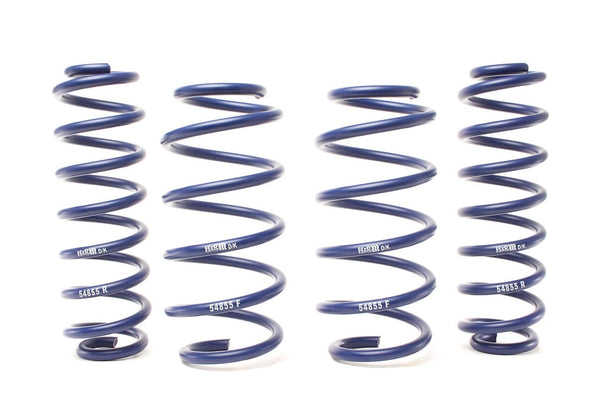


H&R Lift Springs
H&R lift springs raise your ride height for more ground clearance, room for larger tires, and a more capable stance, without the harshness or complexity of a full off-road kit. They bring H&R's German engineering to trucks, SUVs, and wagons that need to go up, not down.
Raise and Level with H&R Lift Springs
Not every build wants to sit lower. H&R lift springs add height, typically in the 25–40mm range, to give you extra clearance for rough roads, a level stance on a vehicle that sags at one end, or the room to fit a larger tire. It's a road-focused lift that keeps the ride quality and predictability H&R is known for.
Because these are true H&R springs, they're cold-wound from high-tensile chromium-silicon steel in Germany and engineered for a specific chassis. They hold their height and rate over time instead of settling, which matters even more on a spring that's carrying the vehicle higher than stock.
Lift Springs vs a Full Suspension Kit
Lift springs are the straightforward option when you want moderate height and better clearance without the cost and complexity of a complete off-road suspension system. They typically bolt in over your factory dampers, provided the shocks are healthy and have enough travel for the added lift. If your dampers are tired or maxed out on travel, plan to replace them at the same time.
Fitment, Tires, and Alignment
More height can open up room for a larger tire, but tire fitment still depends on wheel offset, fender clearance, and turning radius, so check clearance at full lock and full compression. And like any ride-height change, a lift calls for an alignment afterward to keep camber and toe correct and protect your tires.
Browse H&R lift springs here. Not sure which setup fits your car and how you drive it? Call us at 903-993-0000 or email support@springrates.com and we'll point you in the right direction before you spend anything.